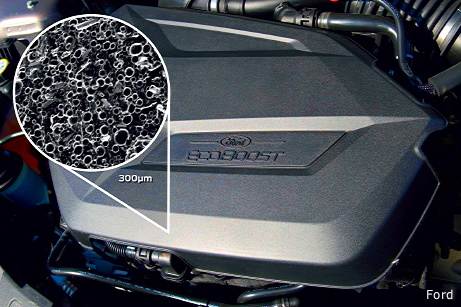
Ford is to introduce lighter engine covers moulded using the MuCell process, which injects gas bubbles into the plastic.
Metal parts can often be lightened by switching to a more efficient material, but it is more difficult to save weight on plastic parts without sacrificing strength, durability or function. The MuCell foaming technology developed by Trexel introduces a gas into the polymer as it is moulded, leaving micron-sized voids which form a honeycomb structure. These tiny spaces save weight by reducing the amount of plastic used, without compromising the integrity of the part.
MuCell brings a host of other benefits with lower pressures used to mould the plastic and up to 33 per cent more parts per hour than a conventional process. This increase in speed and efficiency reduces energy consumption, manufacturing emissions and cost for parts produced using the innovative technique.

The MuCell technology will see its first application in engine covers on vehicles such as Focus, C-MAX and Grand C-MAX, S-MAX, Mondeo and Galaxy in the next few years. Ford has committed to a minimum of 100kg weight reduction from its smallest cars and up to 300kg from larger cars by 2020 as part of environmental initiatives.